The Bible did not fall from the sky as one finished book, and it was not invented by a church council. It was written over about 1,500 years, completed by the apostles, and then kept, copied and translated by believers for two thousand more, often at the cost of their lives. Jesus promised, “Heaven and earth shall pass away, but my words shall not pass away” (Matthew 24:35). Here is how He has kept that promise, from His own day to yours.
The Scriptures Jesus read (about AD 30)
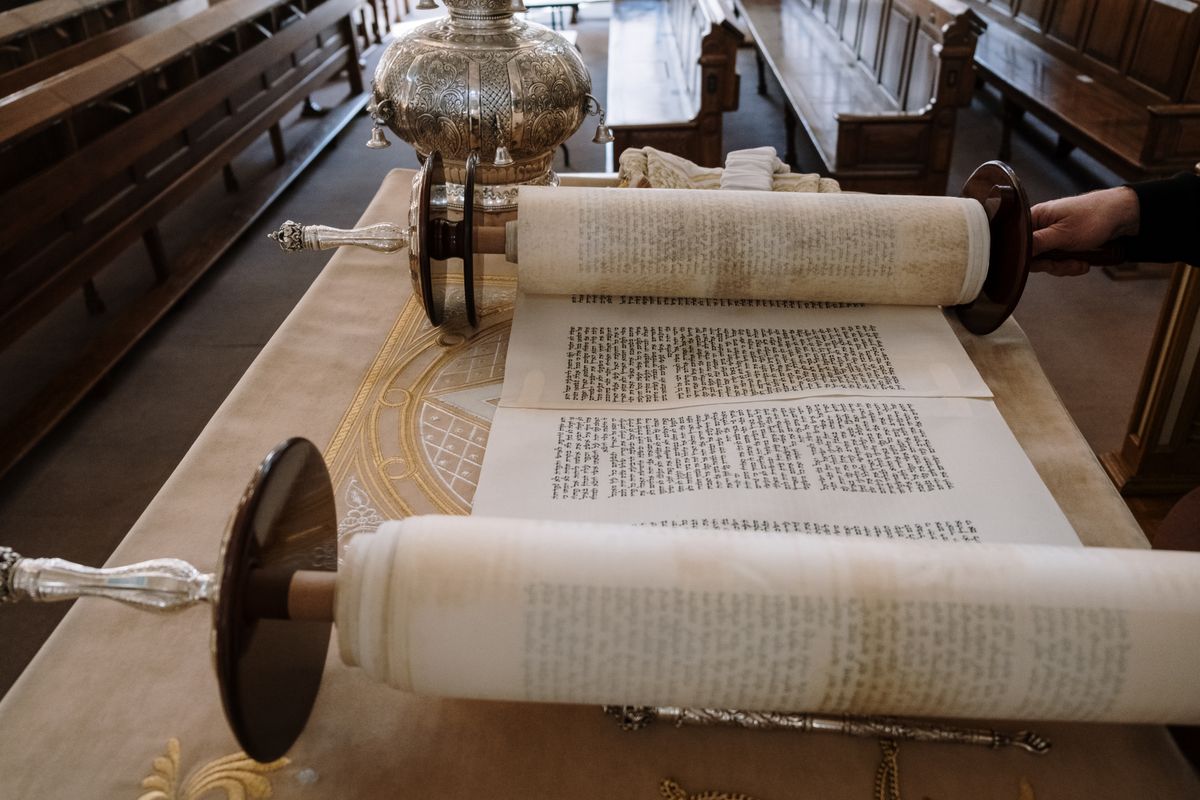
Jesus read from a scroll of Isaiah in the synagogue at Nazareth (Luke 4:16–21). His Bible was what we call the Old Testament, which the Jews spoke of in three parts: “the law of Moses, and... the prophets, and... the psalms” (Luke 24:44). It was written in Hebrew, with some Aramaic, and many Jews also read it in a Greek translation, the Septuagint. Jesus treated every word as true: “the scripture cannot be broken” (John 10:35), and “one jot or one tittle shall in no wise pass from the law” (Matthew 5:18).
The New Testament written (about AD 49–95)
- Letters first. Paul's earliest letters, Galatians and 1 Thessalonians, date to about AD 49–51. They were read aloud in the churches and passed from church to church (1 Thessalonians 5:27; Colossians 4:16), and Peter already counted Paul's letters among “the other scriptures” (2 Peter 3:16).
- The Gospels. Matthew, Mark, Luke and John were written, most scholars agree, between about AD 50 and 95, while eyewitnesses were still alive. Luke says he wrote from those “which from the beginning were eyewitnesses” (Luke 1:2).
- The last book. John wrote the Revelation on Patmos around AD 95. With the death of the last apostle around AD 100, the New Testament was complete: “the faith which was once delivered unto the saints” (Jude 3).
Copied, guarded and recognized (AD 100–400)
- Copied by hand. Early Christians quickly adopted the codex, the bound book, for their Scriptures. The oldest scrap of the New Testament, a piece of John 18 called P52, is usually dated to the first half or middle of the second century. More than 5,800 Greek manuscripts of the New Testament survive, more than for any other ancient book.
- Through the fire. In AD 303 the emperor Diocletian ordered the Scriptures burned. Many Christians died rather than hand them over. Ten years later persecution ended, and soon the emperor Constantine was paying for fifty new copies.
- The canon recognized. The church did not create the Bible; it recognized the books that carried the apostles' authority and had been read in the churches from the start. Irenaeus (about 180) knew exactly four Gospels. Athanasius (367) listed the 27 books of our New Testament, and councils at Hippo (393) and Carthage (397) confirmed them.
Kept through the centuries (AD 400–1400)
- Jerome's Vulgate. From 382, Jerome translated the Bible into Latin, the common language of the West, going back to the Hebrew for the Old Testament. It was the Bible of western Christians for a thousand years.
- Scribes and monks. Monks copied the Scriptures by hand in monasteries across Europe (the Lindisfarne Gospels, about 715), and Jewish scholars called the Masoretes (about 600–1000) guarded the Hebrew Old Testament letter by letter.
Into the people's language (1380–1611)
- John Wycliffe and his followers produced the first complete English Bible in the 1380s, translated from Latin and copied by hand. It was banned, and in 1428 Wycliffe's bones were dug up and burned.
- Johannes Gutenberg printed the first major book with movable type, a Latin Bible, around 1455. Erasmus printed the Greek New Testament in 1516, and Martin Luther translated it into German in 1522.
- William Tyndale printed the first English New Testament translated from the Greek in 1526, so that, as he said, “a boy that driveth the plough” could know the Scriptures. He was strangled and burned in 1536, praying, “Lord, open the King of England's eyes.” Within three years the king had authorized an English Bible for every church.
- The Geneva Bible (1560) brought verse numbers and was the Bible of Shakespeare's England and the Pilgrims.
- The King James Version (1611) was translated by about fifty scholars from the Hebrew and Greek, keeping much of Tyndale's wording. The edition most people read today is the revision of 1769. It is the version read aloud in our Bible app.
Found again, and sent to every nation (1800s to today)
- Codex Sinaiticus, a fourth-century Bible with the oldest complete New Testament, was found at Mount Sinai in 1844 and 1859.
- The Dead Sea Scrolls, found from 1947, include pieces of every Old Testament book except Esther. The Great Isaiah Scroll, copied before Jesus was born, agrees almost word for word with the Isaiah we read, a thousand years older than any Hebrew Isaiah known before.
- Missionaries and translators, from William Carey in India to Wycliffe Bible Translators, have carried the Bible into language after language. Today the whole Bible exists in more than 700 languages, and part of it in thousands more, yet many peoples still wait for God's Word in their own tongue.
Why it matters
The Bible in your hands is the Bible Jesus and the apostles gave. It was not changed in secret or invented later: it was copied openly by thousands of hands, checked against thousands of manuscripts, and carried to us by people who loved it more than their lives. “The word of our God shall stand for ever” (Isaiah 40:8).
The best way to honor them is simple: open it, believe it, live it, and hand it on.
For a day-by-day walk through this history with the Scriptures, start the study How We Got the Bible in the Bible's Plans.